
Photo Credit: Freepik- DC Studio
Wayne Wang’s The Joy Luck Club, released in 1993, remains a masterwork of emotional storytelling, resonating across generations and cultures with its nuanced exploration of mother-daughter relationships and the complexities of cultural identity. Adapted from Amy Tan’s novel, the film weaves together the stories of four Chinese immigrant mothers and their American-born daughters, each narrative echoing with longing, sacrifice, and the often-unspoken desire for understanding.
On The Ties That Bind
The film tackles the intricate story of mother-daughter bonds. The narrative structure interlaces present-day conversations with deeply personal flashbacks, mirroring the emotional distance and closeness that define these relationships. The mothers, shaped by hardship and trauma in China, carry with them not only memories but also hopes and fears for their daughters’ futures. Their love is fierce, but sometimes misunderstood, filtered through cultural and generational gaps.
The daughters, on the other hand, were raised in America and often find themselves at odds with their mothers’ expectations and traditions. They struggle to reconcile their American upbringing with the Chinese values their mothers embody. This tension is palpable in scenes where daughters dismiss their mothers’ advice as old-fashioned or irrelevant, only to later discover the depth of sacrifice and wisdom behind those words. The film’s emotional power lies in its ability to evoke empathy for both sides: mothers who have given up everything for their children, and daughters who yearn for autonomy and acceptance.
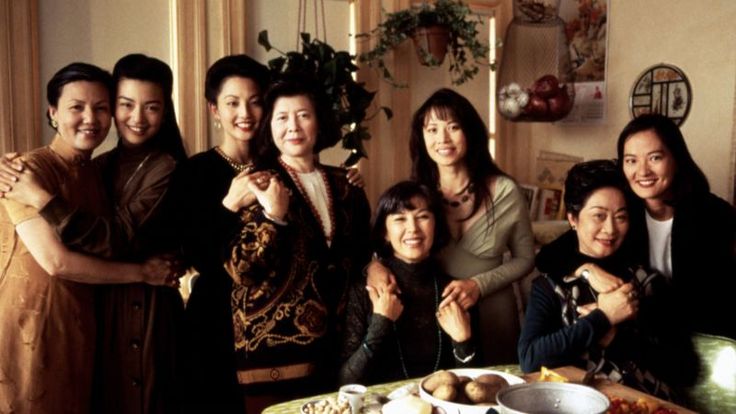
Photo Credit: Pinterest- Newsfeed
Yet, beneath these personal struggles lies a deeper question that extends beyond the family and into the very heart of identity. The Joy Luck Club delves deeply into the challenges of forging an identity at the intersection of two cultures.
The daughters, American in speech and manner, sometimes reject their Chinese heritage, seeing it as a barrier to belonging in mainstream society. Yet, as they mature, many come to recognize that their identities are incomplete without an understanding of their roots. The film captures this journey of self-discovery, showing how the daughters’ American experiences are inextricably linked to the histories and sacrifices of their mothers. The struggle for identity is not unique to the characters but resonates with countless children of immigrants, making the film’s message timeless and universally relatable. The mothers’ stories, marked by war, loss, and resilience, become a mirror for their daughters, reflecting both the pain and the strength that have shaped their family legacies.
The Swan Feather As A Symbol Of Hope
One of the film’s most enduring symbols is the swan feather. The movie opens with a parable: a woman brings a swan to America, hoping to give it to her daughter as a symbol of hope and transformation. At the border, the swan is taken from her, leaving her only a single feather. She tells her daughter, “This feather may look worthless, but it comes from afar and carries with it all my good intentions.”

Photo Credit: listal
This feather distills the film’s deepest themes. It embodies the mothers’ sacrifices—their willingness to leave behind everything familiar, to endure hardship, and to nurture dreams for a future they may never fully understand. More than a keepsake, the feather becomes a metaphor for the intangible gifts passed from one generation to the next: love, resilience, and hope. These are not always recognized or valued by the daughters, who at times struggle to see the worth of what their mothers offer. Yet the feather endures, a silent testament to the depth of a mother’s love and the complexity of cultural inheritance.
Wang’s direction heightens this symbolism with a tapestry of visual motifs—mirrors reflecting fractured identities, mahjong tiles echoing the unpredictability of fate, and family gatherings that serve as both battlegrounds and sanctuaries. The predominantly Asian cast, groundbreaking for its time, brings nuance and authenticity to every character, inviting viewers to see beyond stereotype and into the emotional truths at the film’s core.
The impact of The Joy Luck Club is undeniable. Its honesty and humanity move viewers from all backgrounds, prompting reflection on their own relationships and histories.
Decades after its release, the film remains urgent and relevant, especially as society continues to grapple with questions of representation, generational conflict, and what it means to belong in a new country. Its enduring legacy lies in its ability to humanize the struggles and triumphs of families navigating the space between worlds, reminding us that even the smallest gestures—a story shared, a feather passed down—can carry the weight of generations.
In celebrating the complexities of motherhood, the pain and beauty of cultural inheritance, the hope that bridges generations, and the courage it takes to start anew in a different land, The Joy Luck Club stands as a timeless testament to the power of empathy, storytelling, and love.
This was written by our contributing writer, Sarah Hernaez.

Leave a Reply