
Image Source: Freepik- pikisuperstar
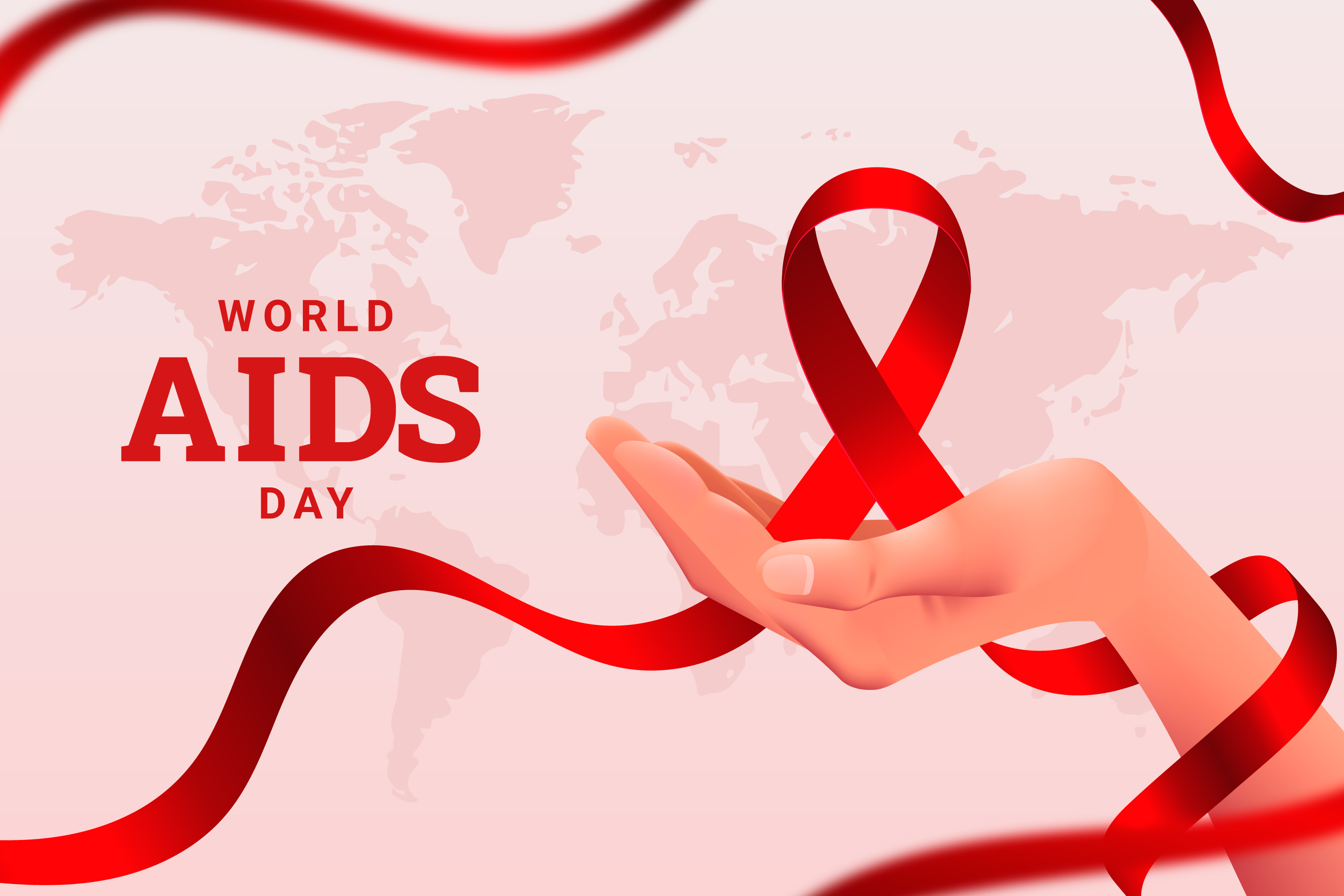
World AIDS Day is on December 1st every year. It is a day dedicated to raising awareness about HIV/AIDS, showing support for people living with the virus, and remembering those who have died from AIDS-related illness.
Definition of HIV/AIDS
Acquired immunodeficiency syndrome (AIDS) is an ongoing, also called chronic, condition. It’s caused by the human immunodeficiency virus, also called HIV.
HIV damages the immune system so that the body is less able to fight infection and Human immunodeficiency virus (HIV) is the virus that causes acquired immune deficiency syndrome (AIDS). HIV weakens your immune system by destroying your T-cells until you are unable to fight off even minor illnesses. You can have HIV without any symptoms. Getting tested and starting treatment early gives you the best chance of living a long life.
World AIDS Day activities include wearing red ribbons to show support, holding community events like forums and health fairs that offer testing and education, and raising awareness through media campaigns and fundraising. Other activities involve hosting lectures, cultural events, or prayer vigils, and encouraging people to share their stories to reduce stigma and discrimination.
Awareness and education
Community forums: Organize public meetings or town halls to discuss the local impact of HIV/AIDS, including the perspectives of those living with the virus.
Media campaigns: Work with local newspapers and radio stations to publish articles, host interviews, and air public service announcements.
Educational events: Hold lectures for students or the public to share information on diagnosis, treatment, and prevention.
Quizzes: Create interactive quizzes to test knowledge about HIV/AIDS and offer prizes to winners.
Support and solidarity
Wear a red ribbon: This is the universal symbol of support for people affected by HIV and AIDS.
Fundraising: Sell red ribbons to raise money for local, national, or international HIV/AIDS charities.
Support groups: Organize events like the “Positive Lounge” to provide a safe space for people living with and affected by HIV to connect and find support.
Community engagement
Health fairs: Host events that include free HIV testing and provide access to condoms and other prevention resources.
Partner with organizations: Involve large employers, faith-based organizations, schools, and other community groups in your activities.
Government outreach: Invite government officials to visit local HIV/AIDS service organizations.
Advocacy: Encourage people living with HIV and other civil society groups to share their stories and advocate for better policies and increased funding.
WHO CAN GET HIV/AIDS?
Anyone can get AIDS if they are exposed to the HIV virus, regardless of their sexual orientation, race, gender, or age. The most common ways for HIV to be transmitted are through unprotected anal or vaginal sex, sharing needles or syringes for drug injection, and from an infected mother to her baby during pregnancy, labor, or breastfeeding. People who have other sexually transmitted infections (STIs) or other STIs are also at a higher risk of getting HIV.
CAN HIV/AIDS BE CURED?
No, HIV cannot be cured, but it can be effectively treated with antiretroviral therapy (ART) to the point where it becomes a manageable chronic condition, allowing people to live long and healthy lives and preventing its progression to AIDS. ART is a combination of medications that keeps the amount of virus in the body, or viral load, so low that it is undetectable by standard tests. Having an undetectable viral load also prevents HIV from being transmitted to sexual partners.
How ART works
Antiretroviral therapy (ART): A daily treatment plan of a combination of HIV medicines.
Reduces viral load: ART lowers the amount of HIV in the blood to an undetectable level.
Prevents transmission: When a person’s viral load is undetectable, they cannot transmit HIV to their sexual partners.
Keeps you healthy: Treatment allows the immune system to recover and fight off infections, enabling people to live long, healthy lives.
Treatment options
Pills: Most people take a combination of medicines in a single pill or a few different pills each day.
Injections: Some people may be eligible for injectable ART, administered by a healthcare provider once a month or every two months.
Key takeaway
Start treatment immediately: Everyone diagnosed with HIV should start ART as soon as possible after diagnosis.
Take medicine consistently: It is crucial to take the medicine as prescribed to maintain an undetectable viral load and prevent the virus from harming the immune system or becoming transmissible.
It is not a cure: While highly effective, ART does not eliminate the virus from the body, and there is no cure for HIV at this time.
Conclusion
HIV/AIDS has shifted from a fatal disease to a manageable chronic condition for those on treatment, but the epidemic remains a significant global challenge.
Key conclusions are the need for continued efforts in prevention, testing, and treatment access, as well as the importance of addressing stigma and discrimination to combat the spread of the disease.
This was written by our contributing writer, Duet Mlotshwa.

Leave a Reply