
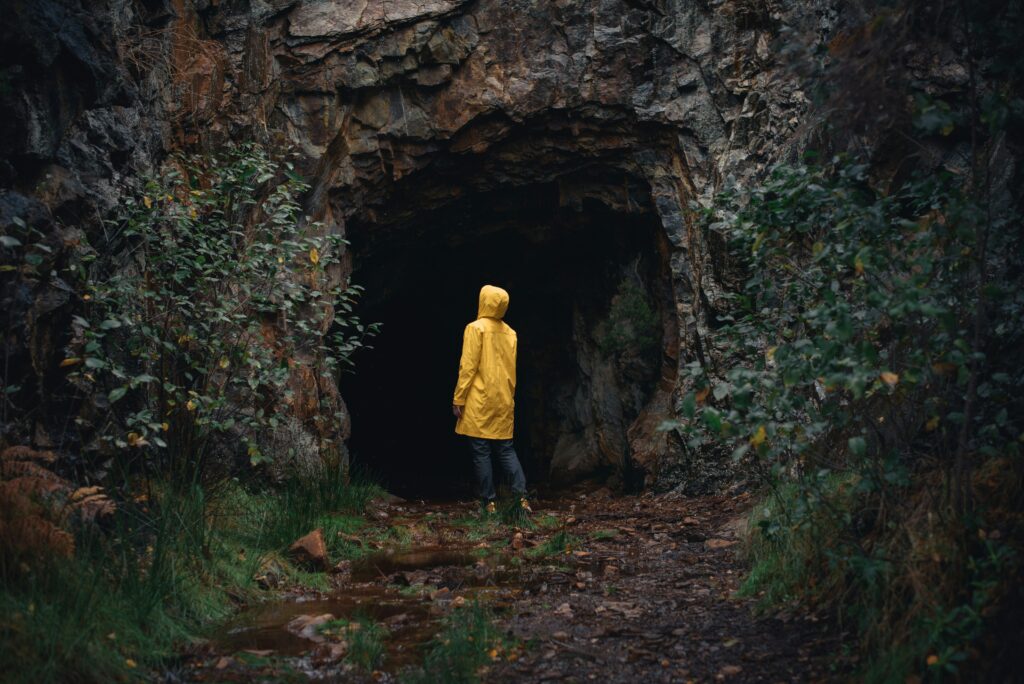
Image Credit: Unsplash- Maksym Kaharlytskyi
Nobody noticed the girl in the yellow raincoat until she began stealing time.
Not in the usual way—she didn’t distract clocks or cut the wires in wristwatches. No. The girl, who called herself Juniper (because her real name was too sharp), had the quiet kind of magic that made the wind pause when she walked by. In her town—foggy, overgrown, forgotten—she lived above an abandoned watch shop that still smelled faintly of brass and loneliness.
She collected moments like others collected coins or pressed flowers. First kisses, last words, almost-confessions—if they hung in the air too long, she caught them. Slipped them into tiny glass vials and labelled them in delicate handwriting: “1.4 seconds of a smile that meant more.” Or, “Time spent waiting to say sorry. Unused.”
Nobody taught her this. Time simply bent around her fingers.
She didn’t age like the other children. At fourteen, she still looked like a dream someone had half-finished sketching. Her hair was long and black like spilled ink, and her eyes looked through people, not at them.
People said strange things happened around her. That time stuttered. That a boy who once tried to kiss her at the town carnival forgot his own name for a week. That Juniper never spoke out loud, only wrote her words on bits of torn paper and left them like breadcrumbs.
But no one ever asked why she did what she did.
Not until Kit moved in across the alley.
Kit was made of edges and noise. Hair always messy, voice too loud, always tapping on things like he was waiting for a beat to start. He noticed Juniper on his second day in the town, crouched in the gutter collecting rainwater in a teacup.
“Is that… for a potion?” he asked, half-joking.
Juniper blinked slowly. Then nodded.
He grinned. “Cool.”
She tilted her head, and instead of replying, handed him a slip of paper:
“I like people who don’t laugh at magic.”
From that moment on, Kit followed her like a shadow that hummed showtunes. He asked too many questions and touched things she didn’t want touched. But he was kind. Messy, but kind. Juniper didn’t know many people who were both.
After a while, she showed him the jars.
Rows and rows of vials filled the shelves in her room. Some shimmered with golden light. Others were nearly invisible. A few were cracked, and a couple floated. Kit reached out to touch one labelled “the last second before heartbreak,” but she slapped his hand away, gently but firmly.
“That one’s sharp,” she wrote. “You don’t want to bleed with memory.”
He believed her. It felt like the kind of truth your bones recognized before your brain did.
“Why do you keep them?” he asked once.
Juniper stared at him. Then, slowly, wrote:
“So they don’t disappear forever.”
He didn’t ask again.
One day, Juniper noticed something strange. Her vials were dimming. Moments she’d collected—ones filled with laughter and trembling joy—were fading, like old photographs.
Time, it seemed, was fighting back.
“You can’t hoard it forever,” Kit said, watching her pace.
She looked at him. Wrote: “Then what do I do with it?”
“Give it back,” he shrugged. “Maybe not to the people, but to the world. Plant it. Release it. Let it bloom.”
That night, Juniper didn’t sleep. Instead, she tiptoed into the woods behind her building. The moon hung low like it was watching her. She dug a small hole in the moss and poured in a vial of “thirteen seconds of real laughter between strangers.”
Nothing happened at first.
But three days later, a burst of wildflowers sprouted in that exact spot—strange, glowing ones with petals shaped like clock hands.
She smiled. This, she thought. This is what time wants.
And so Juniper became not just a collector, but a gardener.
She planted memories in graveyards and schoolyards, train stations and quiet ponds.
Sometimes, people passing by would feel something—an inexplicable warmth, a sudden clarity, or the courage to say something they’d been too scared to say.
The world began to glow in invisible ways.
But not all memories were kind. One day, Kit found her crying silently in the alley, holding a broken vial in her hands. The label was blurred, but the contents pulsed with deep violet light and sharp edges.
“What is that?” he asked.
Juniper didn’t write. She just pressed it into his hand.
And suddenly, he saw it:
A man screaming. A door slamming. A girl hiding in a closet, clutching a broken locket. A moment that lasted both too long and not long enough.
Kit dropped the vial, shaking. “You’ve been carrying this?”
Juniper nodded. Then finally, out loud—her voice brittle and beautiful—she whispered,
“Some things are too heavy to forget.”
Kit didn’t try to fix it. He just sat beside her. Quiet. Close.
Later that night, they buried that vial in the coldest part of the forest. The next morning, a single tree stood there, tall and solemn, its bark etched with symbols no one could read but everyone could feel.
Years passed. The town began to change. Not drastically—but subtly. People lingered in parks longer. Apologized more. Hugged tighter. There was a sense of… softness in the air.
Juniper kept collecting, but now only briefly—just long enough to understand a moment before letting it go. She didn’t hoard anymore. She honored.
Kit stayed, too. He never became magical, but he didn’t need to. He had a camera instead, and he took photos of the places where memories bloomed. He called them “evidence of wonder.”
Together, they made the town stranger and more beautiful.
And if you ever visit, look for the girl in the yellow raincoat.
She might hand you a jar.
Or a flower.
Or a memory that isn’t quite yours—but feels like it could’ve been.
This was written by our contributing writer, Alisha Blanch.

Leave a Reply