
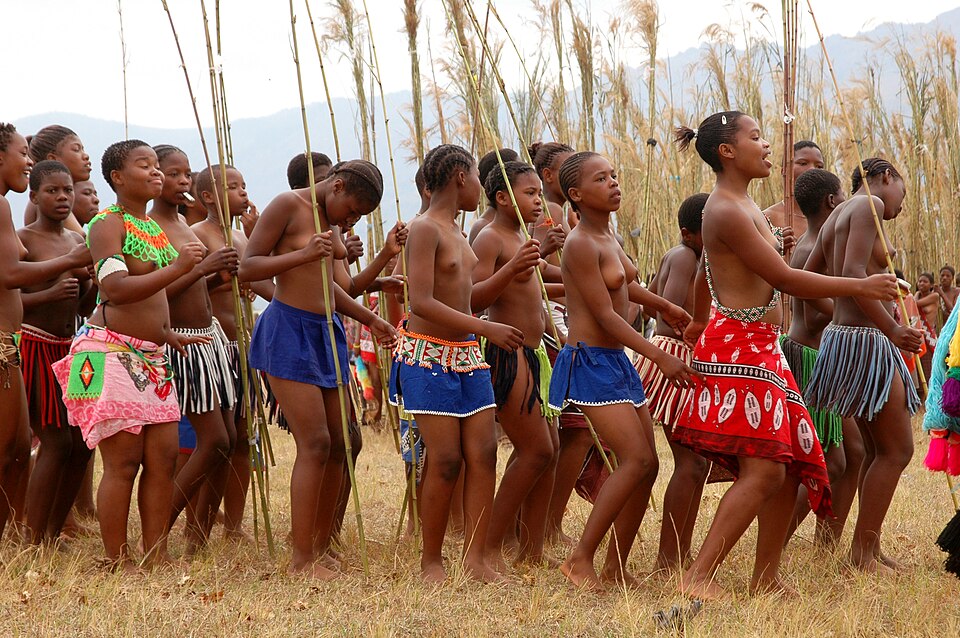
The Reed Dance Festival, known as Umkhosi woMhlanga in Zulu or Umhlanga in Eswatini, is a major annual cultural event held in late August or September. Tens of thousands of unmarried, childless young women gather to celebrate womanhood, preserve traditional values, and present cut reeds to the royal family.
Key Traditions and Meaning of the Reeds:
Participants cut long reeds from riverbeds and carry them in a grand procession to present to the King or Queen Mother. The bundles symbolize unity, strength, and the protection of the nation.
Purity and Respect: The ceremony honors traditional customs and encourages discipline, self-respect, and cultural pride among young women.
Guidance: Older women mentor the participants, passing down cultural values, discipline, and lessons on womanhood.
Music and Dance: Dressed in bright traditional beadwork and attire, the participants fill royal arenas with synchronized dancing, drumming, and historic chants.
Festival Breakdown
Registration and Travel:
The first few days involve participants arriving at the royal village, mastering, and traveling to designated areas to cut long reeds.
Delivery and Rest:
The maidens bring the reeds back to the royal residence, followed by a day of rest.
Ceremony: The event features vibrant traditional singing, complex synchronized dancing, and elaborate beadwork
The Main Days:
The final days feature the official presentation of the reeds and the main public holiday of dancing before the Royal.
Symbolism:
The reeds represent purity, strength, and resilience, while also serving a practical purpose for windbreaks or repairs around royal residences.
Locations and Timing of Zulu Reed Dance:
It is held annually in September at royal palaces (such as Enyokeni Palace in Nongoma or alternate royal sites in KwaZulu-Natal), drawing participants from across South Africa.
Eswatini Reed Dance: An eight-day national event centered at the Ludzidzini Royal Residence near Lobamba, functioning as a prominent public celebration and a platform for social messaging.
This was written by our contributing writer, Duet Mlotshwa.
Image 1 Source: Wikimedia Commons, Amada44
Cover Photo Source: Pexels, Inês Pavão


Leave a Reply