
Although Halloween is still a few weeks away, September provided an early glimpse into a world of mystery, intrigue, and suspense. Accompanied by our cousins, who are devoted Agatha Christie enthusiasts, we spent a memorable couple of nights immersed in the work of the world’s best-known crime writer.
Our first adventure took us underground to watch The Mirror Crack’d in a cave setting in Torquay, the birthplace of Agatha Christie. From the moment we began our descent beneath the earth, the experience felt unique. Leaving daylight behind, we followed winding pathways through ancient rock formations and entered a hidden world carved out over thousands of years.
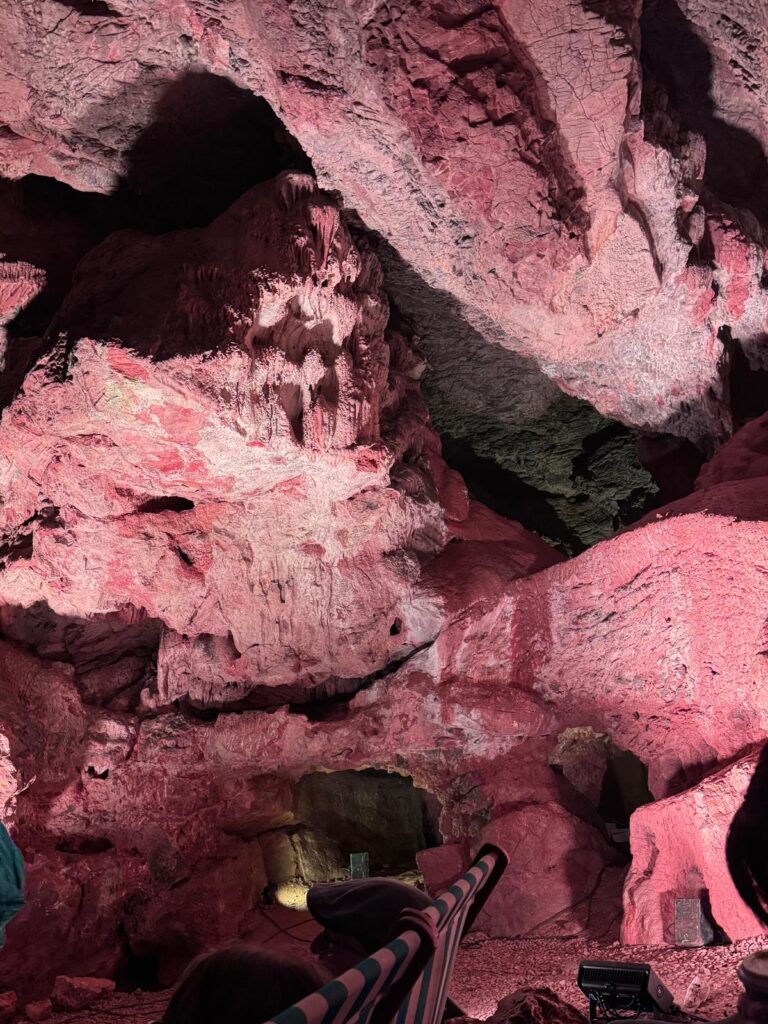
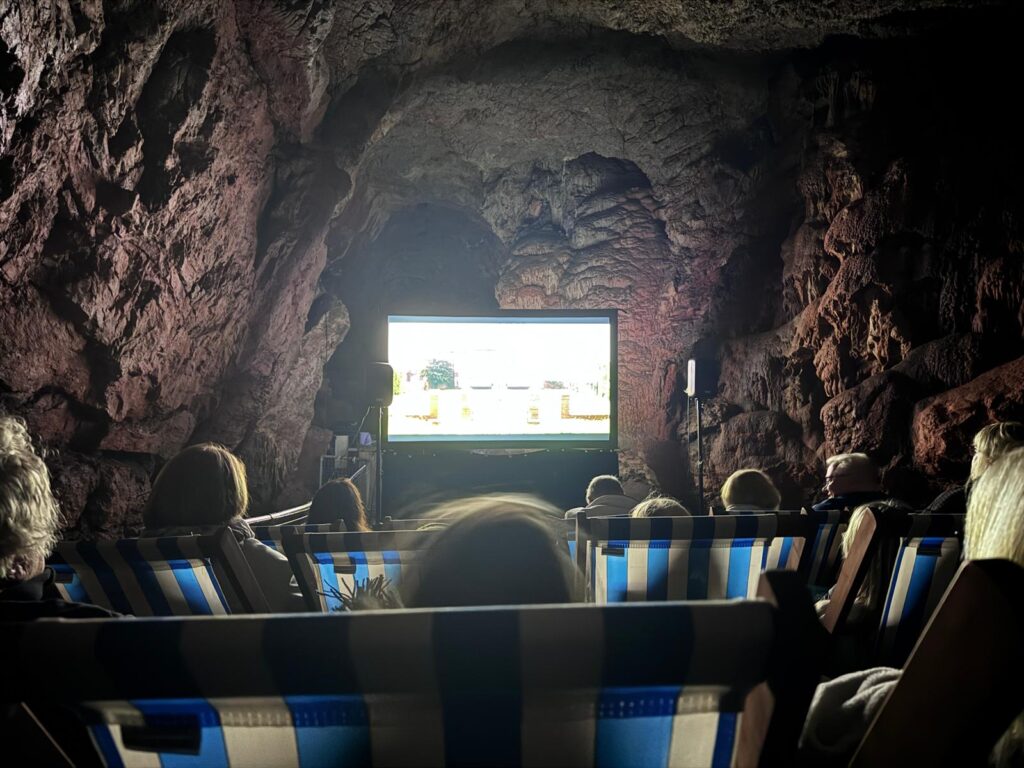
The events staff greeted us, and she went through the process of what to expect. Then we had to walk up a part of the caves where the film was being shown. The modern world seemed to disappear, replaced by the distant sound of dripping water and the gentle hum of anticipation from fellow filmgoers. The screening area itself was unlike any cinema I have ever visited. Beach deckchairs were arranged across the uneven cave floor, while carefully positioned lights illuminated the dramatic rock formations surrounding us.
Looking up, the cave ceiling vanished into darkness. Looking around, shadows seemed to stretch endlessly into hidden corners. It was impossible not to imagine secrets lurking just beyond sight. The setting felt perfectly suited to an Agatha Christie mystery, where hidden clues and unexpected revelations wait to be discovered.
As The Mirror Crack’d began, the cave itself became part of the story. The flickering images from the screen danced across the cave walls, creating a mysterious atmosphere that no traditional cinema could hope to replicate. Every unexpected noise echoed around us and seemed briefly significant, as though it might be another clue waiting to be uncovered.
Watching the film in this environment also highlighted how filmmaking has changed since its release in 1980. Rather than relying on spectacular special effects or huge production budgets, the story unfolded through strong characters, clever dialogue, and a carefully crafted mystery. The film evoked a sense of nostalgia, transporting viewers back to a time of village fêtes, sack races, and coconut shy stalls. It depicted a close-knit community where everyone knew each other’s business and where rumours, friendships and rivalries formed the backdrop to everyday life.
For me, that sense of community was one of the film’s greatest strengths. The village felt lived-in and authentic. There was a warmth and familiarity to the setting that is rarely seen in modern productions. It reminded me of a time when communities appeared more connected, and people shared in each other’s triumphs, struggles, and everyday lives.
The caves added another layer to the experience. Despite the excitement, the temperature gradually dropped as the evening continued. At first, I barely noticed the cold because I was completely absorbed by both the film and the setting. Only when the screening ended did I realise how chilled I had become. Appearing from the cave into the evening air wanted to return from another world.
Sharing the experience with our cousins made the evening even more enjoyable. As keen Agatha Christie fans, they brought their own knowledge, theories, and favourite stories to the conversation. Discussions before and after the film ranged from favourite characters to attempts to identify clues before the mystery reached its conclusion. Like many Christie fans, we all enjoyed trying to solve the puzzle before Miss Marple revealed the truth.
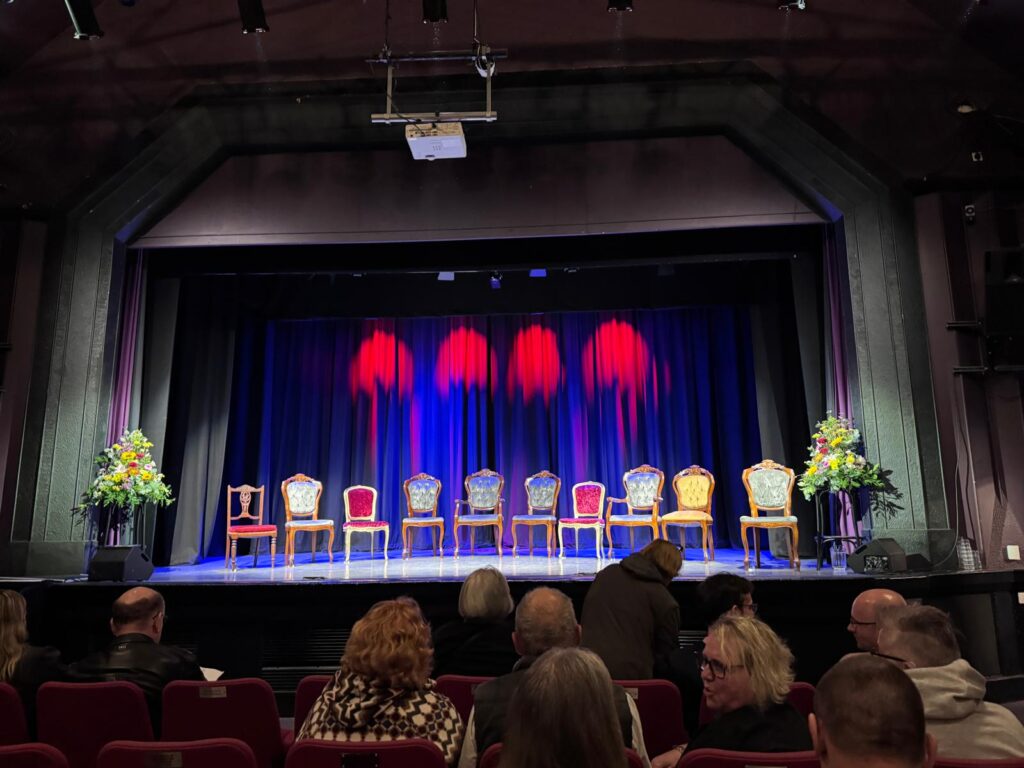
The following evening offered a quite unique experience with a theatre production of Verdict, one of Agatha Christie’s lesser-known plays. Expectations were high, particularly after the success of the cave screening. Before attending, we had imagined an immersive courtroom drama complete with dramatic confrontations and the tension of a live trial.
Instead, the production focused on dialogue and character interaction. The theatre was filled with enthusiastic Agatha Christie fans, some dressed in period costume and others proudly wearing Christie-themed clothing. The atmosphere among the audience was warm and welcoming, reflecting the enduring appeal of her work.
While the production was not quite what we had predicted, it provided an interesting introduction to a lesser-known side of Christie’s writing. At times it needed considerable concentration and imagination, particularly when dialogue carried much of the storytelling. In some ways, it felt like listening to a radio drama or audiobook, with the audience creating much of the setting in their own minds. The theatre was warm compared to the caves, and I noticed that the setting was making me sleepy, so I took forty winks whilst listening and taking in the play. You had to visualize the settings and scenes in your mind to encounter that actual full embrace version of the play.
What struck me most about both experiences was the enduring popularity of Agatha Christie. More than a century after the publication of her first novel, audiences still gather to celebrate her stories, whether in caves, theatres, book clubs, or living rooms. Her mysteries continue to challenge readers and viewers to look beyond appearances, question assumptions, and search for the truth.
Agatha Christie Facts
- Agatha Christie was born in Torquay, Devon, in 1890.
- She wrote 66 detective novels and 14 short-story collections.
- Her books have sold more than two billion copies worldwide.
- Miss Marple first appeared in print in 1927.
- Christie remains one of the most translated authors in history.
- Her play The Mousetrap is the longest-running theatrical production in the world.
Looking back on the couple of days, one thought stayed with me. The real magic of Agatha Christie lies not simply in the mystery itself, but in the conversations it inspires. Whether gathered in a cave, seated in a theatre, or discussing theories around a family table, everyone has a suspect, everyone has an opinion, and everyone wants to uncover the truth. For a late summer trip away for a couple of days, there can be few better ways to spend the time staying in The Grand Hotel, where no one other than Agatha Christie herself has stayed.
This was written by our contributing writer, Sarah Foulkes.
All photos were taken by our writer, Sarah Foulkes.

Leave a Reply