
If there’s a gap in the market, the Kardashians are quick to claim it. Recently, it was announced that Kim Kardashian and Kanye West’s 12-year-old daughter, North West, is set to release her own clothing line. In February, reports revealed that three trademarks had been filed for the tween in plans to start her own brand. According to the filings, these trademarks were filed under several categories, including clothing, accessories, bags, jewelry, and more.
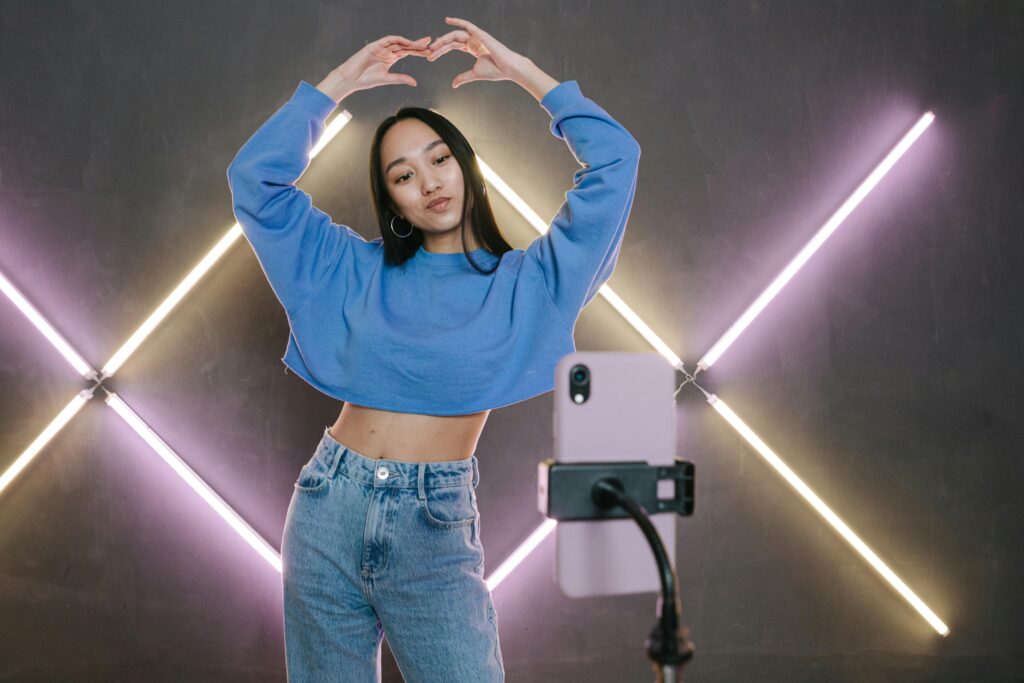
Many fans of the family will, of course, be familiar with North West’s personality as she often appears on the family’s reality show and has become more of a prominent star in her own right. Late last year, the 12-year-old launched her own Instagram page, which has already amassed over a million followers, adding to her fanbase of over 20 million followers on TikTok on a joint profile with Mom, Kim. Her posts feature her lip-syncing to songs (including new music of her own) and sharing bold outfits, often with bright blue hair, which has now become her moniker. Seeing her begin to form her own image and fandom was probably a motivating factor behind this move, and it also raises questions about what a tween star looks like today.
This news cleverly falls right into the growing conversations over the last year about a lack of tween media. The pre-teen market was a space many fashion brands were vying to dominate just over a decade ago. Back in the early 2000s, the high street offered young teens a wide selection of stores, catering to them as they were a major consumer market. Brands knew the importance of the parental purse and kept their fingers on the pulse. Many stores, such as Justice, Limited Too, Walmart, Forever 21, and Claire’s, held a large share of the market and were quick to capitalise on cultural trends. These retailers would often stock merchandise of trending celebrities and partner with them on limited collections.
However, given the nature of social media, trend cycles have become increasingly shorter, making it harder for brick-and-mortar stores to interest shoppers. Traditional retailers have been losing steam for over a decade, with many, such as Claire’s, facing nationwide closures. Online shopping continues to dominate, given its convenience for both older and younger shoppers. Consequently, this has left people unable to bridge the gap between younger and older consumers, as fashion trends circulate online and are accessible to everyone.
Thus, there is now an open market for younger teens who spend more time online, consumed by the adult market on apps like TikTok and Instagram, rather than glued to the Disney Channel like the generation before. The period between childhood and adulthood has become so blurred that it almost no longer exists. North’s Generation, Gen Alpha, born between 2010 and 2024, have grown up in a fully digital age, and many have been exposed to social media before they could even read.
Younger girls today are shaping their own subcultures and setting the trends, often leaving brands playing catch-up. The rise of the “Sephora kid”, the Labubu craze, Jellycat plushies, and fast fashion sites like Shein tailoring lines to younger girls to match their adult styles illustrates this shift. Teenagers now curate their own consumer identities, relying less on traditional fronts. The power of the younger generation has evolved; an actress no longer holds it on a scripted TV show, but rather through influencers who share their lives openly and genuinely, creating a sense of friendship with their followers. The Kardashians pioneered this influencer model, transforming direct communication with consumers into a highly accessible and profitable space. By starting to produce music, build a fanbase, and carve out her own path at just 12 years old, North West is being positioned as a gateway to this new, younger demographic. Her rise could be setting the tone for what we could see in this new chapter of the Kardashian dynasty.
This was written by our contributing writer, Julia Cawele.
Image Source: Pexels, Ivan S


Leave a Reply