
On Greece, the influencer economy, and the quiet violence of the ‘undiscovered’.
There is a taverna on Corfu — or there was; I can’t be sure it still exists — where the paper tablecloths were weighted down with a single candle in a Nescafé jar. The owner’s mother brought food without asking what you wanted. You ate what she gave you. The cats knew the routine and positioned themselves accordingly, tails flicking in the heat, waiting for the moment she’d look away. The whole place smelled of grilled fish and sea salt.
I’m thinking about this place now because I’ve just seen it on Instagram. Or somewhere like it — the angle identical to a dozen others I’ve scrolled past this week. The sea is impossibly blue. The tables are arranged with the kind of casual perfection that takes twenty minutes and a tripod. The caption promises somewhere ‘undiscovered’.
I know this impulse. I have been this person. I am this person, some mornings — recommending a beach to a friend with the quiet territorial thrill of sharing a secret I’m also slightly relieved to release. There’s a strange pride in being the one who ‘knows’, even when the knowing is nothing more than having arrived a little earlier than someone else.
· · ·
I lived in Athens for ten years, from the mid‑eighties to the mid‑nineties. Not visiting. Living. There’s a difference, and it matters to what I’m trying to say.
Athens then was a city that demanded a kind of bravery I didn’t know I had. There was no internet, no translation apps, and not many people spoke English. I carried an English–Greek dictionary everywhere, its spine softening from use. My bravery came from not being afraid to make mistakes. I often did, spectacularly. Shortly after my eldest son was born, a woman in the street said, ‘Beautiful baby.’ Keen to show off my Greek, I proudly replied, ‘Yes, he is a beautiful cucumber.’ One tiny pronunciation mistake, and I’d transformed my son into a vegetable.
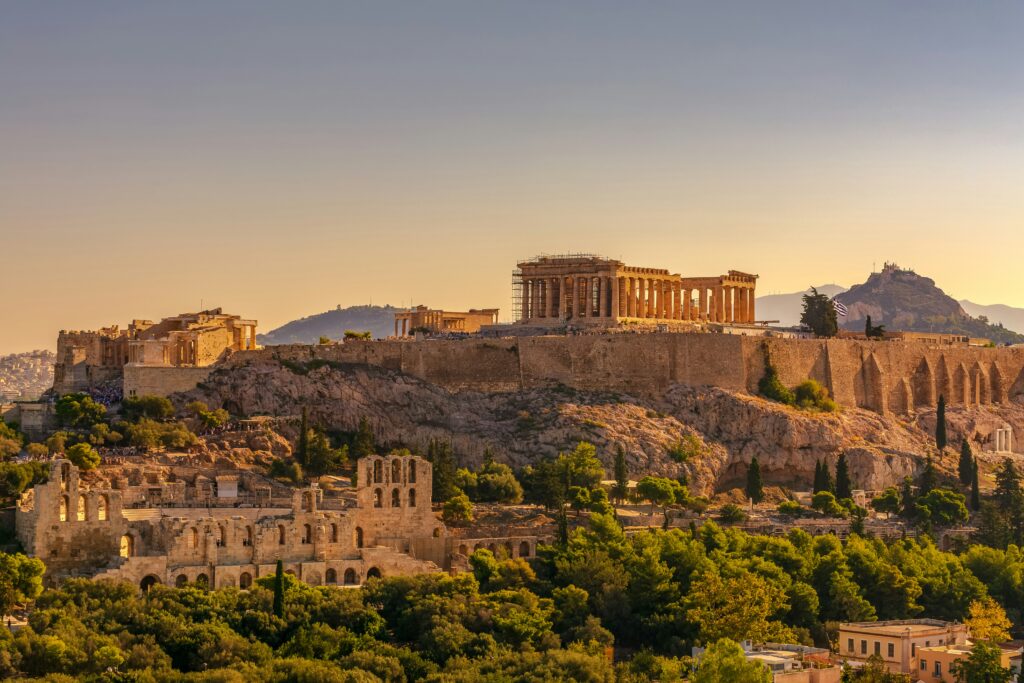
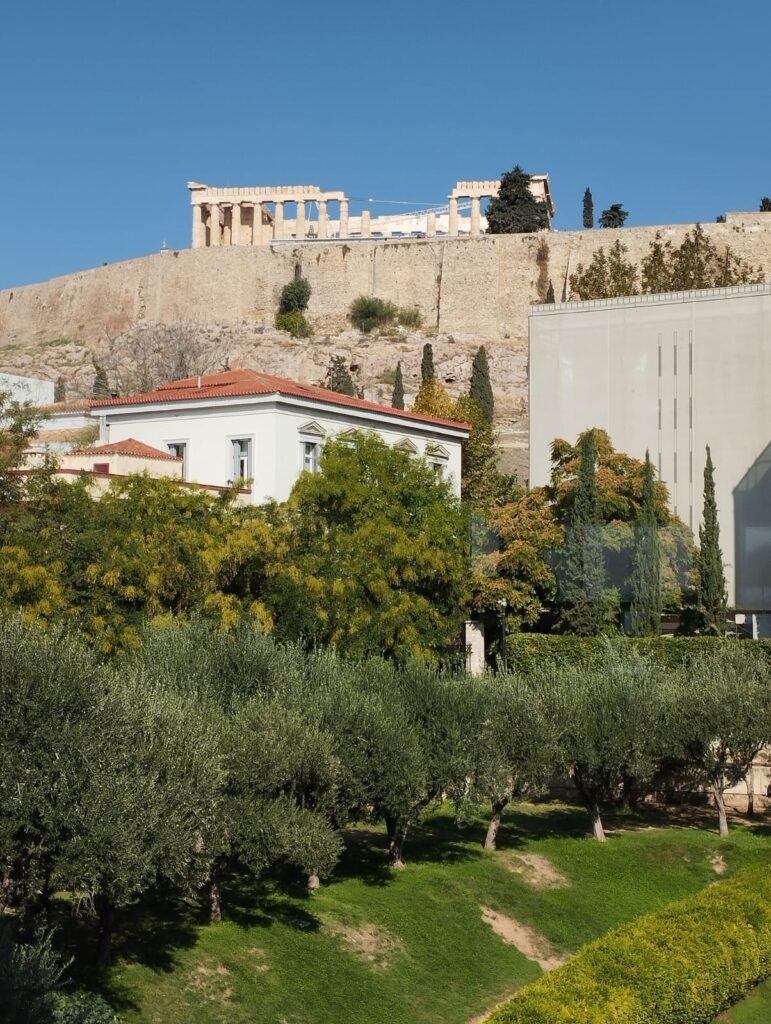
I learned to teach English in Athens with the help of an English-Greek dictionary. I learned to buy fish directly from the fishermen at the little harbor at dawn, pointing and gesturing. I came to understand that the city had a rhythm you couldn’t rush: mornings that began with coffee you sat down for, always; the same faces in the same café; the Acropolis appearing without warning when you turned a corner, still somehow shocking despite the years, like bumping into an old friend in a foreign city.
None of this was curated. It couldn’t have been. There was no audience.
· · ·
The word used in many posts that bothers me isn’t ‘hidden’. It’s ‘undiscovered’.
Undiscovered by whom? The baker who opens at five. The fisherman whose boat you can see from the famous viewpoint. The family that has eaten Sunday lunch at that taverna for three generations. They were never waiting to be found. They were simply there, living, without the benefit — or the burden — of our attention.
To call a place hidden is, in some quiet way, to erase the lives already unfolding there. It suggests a kind of emptiness waiting to be filled by our arrival, our gaze, our content. It turns a living place into a backdrop.
I think about Mykonos in the eighties — a beautiful island, a real Shirley Valentine setting, all whitewashed houses and quiet beaches and evenings that smelled of grilled octopus and warm stone. Now much of it has become another Ayia Napa, with all that comes with it: the noise, the crowds, the sense that the island is performing a version of itself for an audience that never stops filming.
This isn’t a rant. It’s simply the observation that discovery is rarely neutral. We don’t just arrive; we alter.
· · ·
I went back to Athens recently. And Glyfada, where I used to swim — more expensive now, more polished, the kind of place that appears in supplements. It has grown almost beyond recognition: glitzier, more cosmopolitan, full of boutiques and cocktail bars with names that sound like perfume brands. But it was always heading that way, even back then. Cities evolve; they’re meant to.
Athens itself is still Athens — busier, more frantic, but with pockets of calm exactly where they’ve always been. I walked past George’s Taverna, where I once ate the best steak of my life, and was delighted to find it still there. It’s now in the hands of George’s grandson, and the home‑cooked Greek food is as good as it ever was. The tables are new, the sign is brighter, but the smell — oregano, lemon, charcoal — is unchanged.
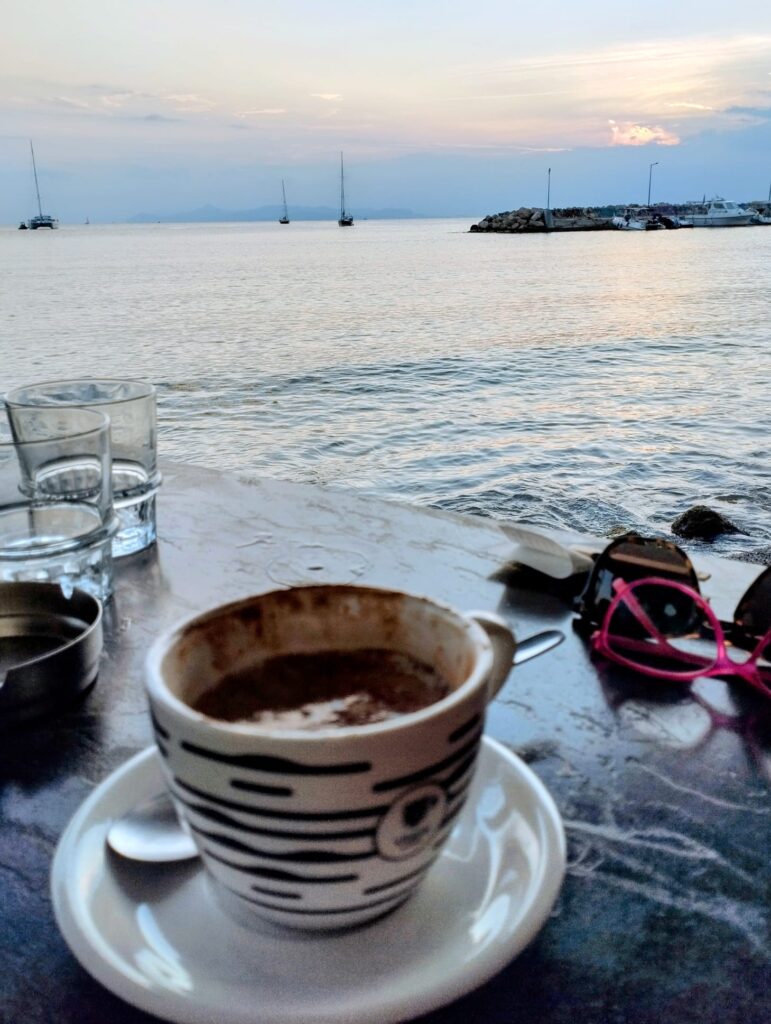
I sat at a café that charged ten euros for a freddo cappuccino and drank it anyway, watching a woman two tables over photograph hers from four different angles before taking a sip. She adjusted the cup, the spoon, the napkin, and her sunglasses. She lifted her chin, softened her jaw, tilted her head. The choreography of authenticity.
I didn’t feel superior. I felt the same pull she did — the urge to hold it, to keep it. We just reach for different things.
· · ·
What we’re actually looking for isn’t a place. It’s a feeling — the specific relief of being somewhere that doesn’t require anything from you. No performance, no productivity, no optimized self. Just the afternoon, the hum of conversation, the clatter of cutlery, the ordinary sounds of a place going about its business.
I found this during my last trip, at an unremarkable café in Glyfada with plastic chairs and a view of nothing in particular. A place that will never appear in anyone’s grid. The coffee was fine. The light was soft. A man at the next table read the newspaper slowly, turning each page like it mattered. A dog slept under a chair.
It wasn’t hidden. It wasn’t undiscovered. It was simply there — and, for a moment, so was I.
And maybe that’s the truth I’ve been circling: the feeling I’m chasing isn’t just simplicity or quiet or the Greece of fewer people and less noise. Perhaps what I’m really chasing is my youth — the version of myself who arrived in this country with a backpack, an English-Greek dictionary, and a kind of unselfconscious courage I didn’t yet recognize in myself.
The sea is still impossibly blue. Greece is still Greece. The world has changed, and so have I. But every now and then, on an ordinary Tuesday, I catch a glimpse of the girl I was — and that, more than anything, feels like coming home.
This was written by our contributing writer, Amanda Judson.
Cover Image Source: Unsplash, Constantinos Kollias
All other photos were taken by Amanda Judson.

Leave a Reply