
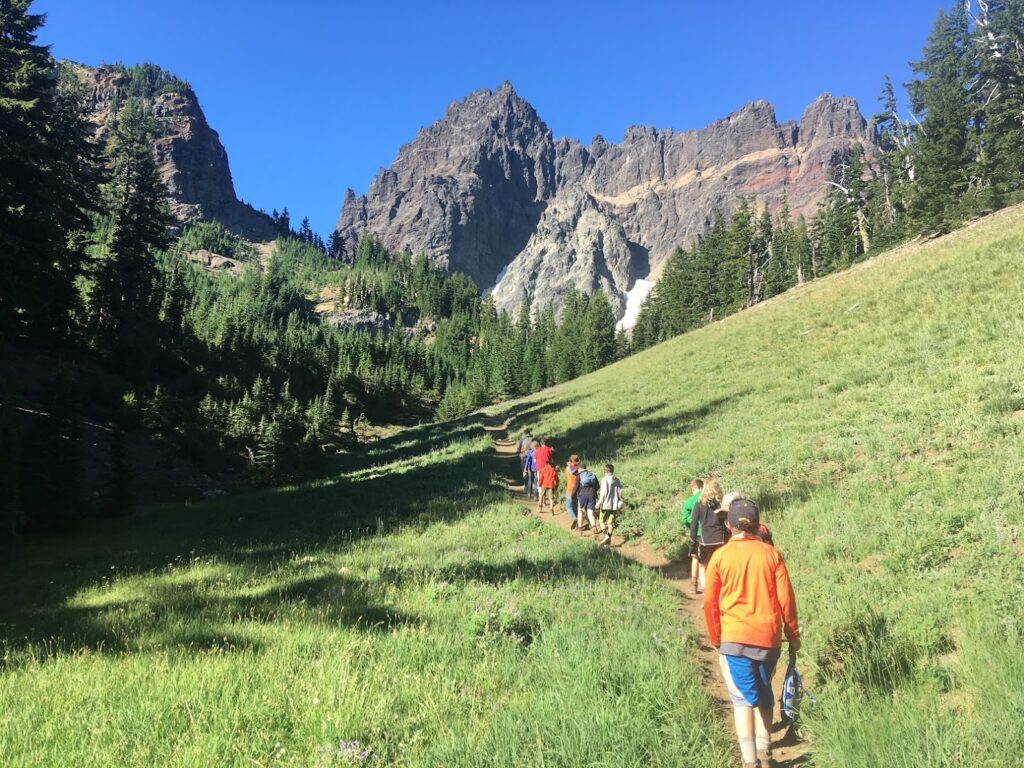
Summer has come to an end, and kids are going back to school, where they will spend most of their time inside. After a full day of staring at Smart Boards and computer screens, many will then turn to their phones and video games. Very few will venture outdoors, let alone play outside until the streetlights come on (as previous generations used to do).
However, learning doesn’t have to take place inside closed classrooms. One could even argue that learning is enhanced and deepened when conducted outside in the natural world. Studies abound on the benefits of outdoor education on children’s ability to concentrate, retain information, make connections, and build meaning – not to mention the benefits to their physical and mental health. Better yet, children enjoy this type of learning.
There’s been an undercurrent of outdoor education activism ever since Richard Louv’s book Last Child in the Woods: Saving Our Children from Nature-Deficit Disorder, published in 2005. Although his book focused mostly on children’s health (as opposed to academics), it started a spur of research and advocacy focused on the benefits of getting kids outside. More outdoor education companies and nonprofits started springing up, offering not just summer camps, but learning opportunities during the school year that could connect to what’s being taught in the classroom.
I, myself, discovered outdoor education in my twenties not long after reading Louv’s book. A one-year internship inspired me to return to school, major in the field, and pursue it as a career. From New York to Maine to Arizona to a small island near Canada, I saw how profoundly kids responded to this outdoor learning – their excitement when making a genuine discovery, the questions and discussions that dug at real-life quandaries, and the eagerness to learn more. Even more impactful was witnessing kids overcome fears, build new friendships, and figure out their own passions to pursue into adulthood. Commonly, a teacher or parent chaperone would comment on how a student who struggled at school was finally coming into their own out there.
When I transitioned into traditional classroom teaching, I was shocked at the differences in students’ attitudes, behaviors, and even their intellectual abilities. It seemed like most of the students (and teachers) didn’t even want to be there. I would spend hours on a lesson plan and barely make it halfway through because I had to manage disruptive behaviors, apathy, and the sneaking away of phones or games on their personal computers. The curiosity, excitement, and energy that I had loved from children in outdoor education was completely lacking inside the schools.
My experiences in both outdoor education and mainstream schools have led me to believe children are simply not meant to be restrained to desks for six-plus hours a day, stuck in stuffy buildings. Ideally, outside learning should be the norm with indoor learning the exception when the weather is dangerous. I realize that, realistically, we are a far cry away from this – at least in the United States. But we can still advocate for outdoor classrooms, school gardens, and field trips that connect students to nature.
You can let your state representatives know you want more access to outdoor education in your schools. The National Caucus of Environmental Legislators has identified over 285 bills across the nation related to this here: https://www.ncelenviro.org/issue/outdoor-engagement/. It is also worth contacting the schools in your area (especially if you have kids) to let them know you want more outdoor education. Finally, consider volunteering for, working for, or donating to the organizations engaged in outdoor education. The Sierra Club, Student Conservation Association (SCA), YMCA, and state natural resources departments are good starting points.
This was written by our contributing writer, Kara Kukovich.
Image Credit: Kara Kukovich

Leave a Reply