
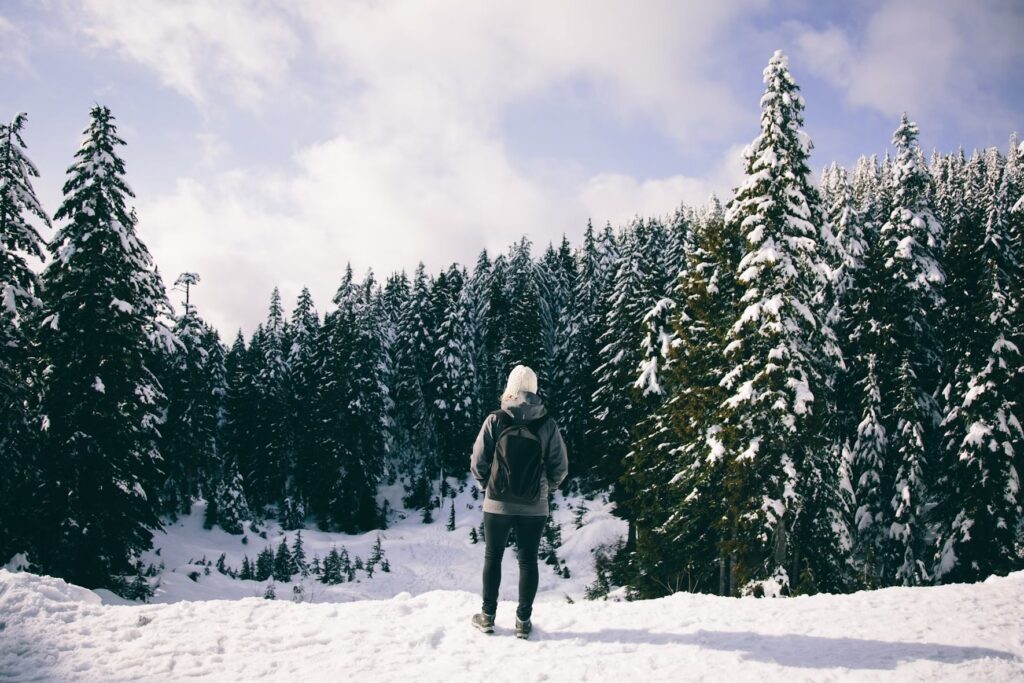
While we find ourselves outside to enjoy the winter season to its fullest before it comes to a close, it’s advised to keep your safety, as well as others, in mind while exploring the snow-covered trails. As someone who hikes throughout the year, wintertime has been the most dangerous if one isn’t careful. Before heading out, keep this series of hiking tips in mind to make the most of the outdoors without the risk.
- Watch the weather forecast and research trail conditions.
The weather can change rather swiftly, especially while hiking at higher elevations and alongside lakeside trails. If rain or sleet is predicted, be aware that it can lead to hypothermia.
Many trailheads aren’t accessible during the winter, so looking up the current conditions can be useful for you to get there safely. This plays hand-in-hand with the weather forecast. If a blizzard or poor visibility is likely, it increases your chances of getting lost, and thus not the best day to go hiking.
The conditions also contribute to which type of winter hiking gear you would need. If the trail is one that has been well-traveled with hard-packed snow, winter boots, and microspikes will be useful. If the trail is compacted, snowshoes will be necessary to avoid sinking into the snow. If you’re hiking through mountainous terrain, be aware of avalanche conditions, as it’s not only backcountry skiers that can fall victim.
- Required Essentials.
The following essentials will be useful in ensuring your safety while hiking alone or with a group:
Food and water – Eating a good and proper meal before your trip will make sure that you don’t run the risk of starvation, as well as carrying salty foods and protein-rich snacks on your person. Carrying water will also keep you hydrated, with regular water or water with electrolyte replacement advised.
Appropriate clothing – Appropriate clothing would include a warm/waterproof parka, hat, gloves for the snow and rain, a spare pair of dry clothing should you get wet, and dressing in layers. Furthermore, waterproof boots with gaiters to keep the snow and mud outside of your boots. Hiking poles can be of great use, too, in order to help with footing if walking on icy trails. Over-the-shoe traction devices can come in handy should you accidentally step on a stretch of ice; regardless of how short, they will aid in keeping you steady.
Emergency supplies – This includes a whistle and/or a signal mirror as long as you know how to use the equipment, a first aid kit that has Band-Aids, antiseptic, ace wrap, and so forth. You can also carry a tracking app on your phone; that way, you are able to be found as quickly as possible in case of an emergency situation. Lastly, should be a map and a compass, as they are useful tools given how not all trails are well-marked during the winter compared to the warmer seasons.
- Plan on an early start
After alerting people of your hiking plans, getting a head start as early as possible is a given, considering how the daylight hours shorten during the winter. Doing this will avoid you from finding yourself stuck out in the dark. Since winter hiking takes longer than summer hiking from having to trudge your way through the snow, are moving slower, and can encounter more obstacles in your path, a stressful situation can be narrowly avoided when starting early. This includes taking trails in sunnier areas, too.
Some other useful tips would include knowing the signs and symptoms of hypothermia, being cautious of wildlife in the surrounding area, applying sun protection, having a safety plan, and packing the ten essentials alongside what I had listed above. Winter hiking can be done safely and enjoyed to its fullest as long as you are prepared for any type of situation that could come your way.
This was written by our contributing writer, Claire Kroening.

Leave a Reply